Published 8 March 2026
Summer Weather Outlook: How El Niño Could Shape Your Holiday
Climate models from ECMWF and other major forecasting centres are increasingly pointing to the return of El Niño conditions during the second half of 2026. For travellers, this isn't just abstract science — it has real, tangible consequences for where you'll find sunshine, where you'll encounter unexpected rain, and where conditions will remain largely unchanged.
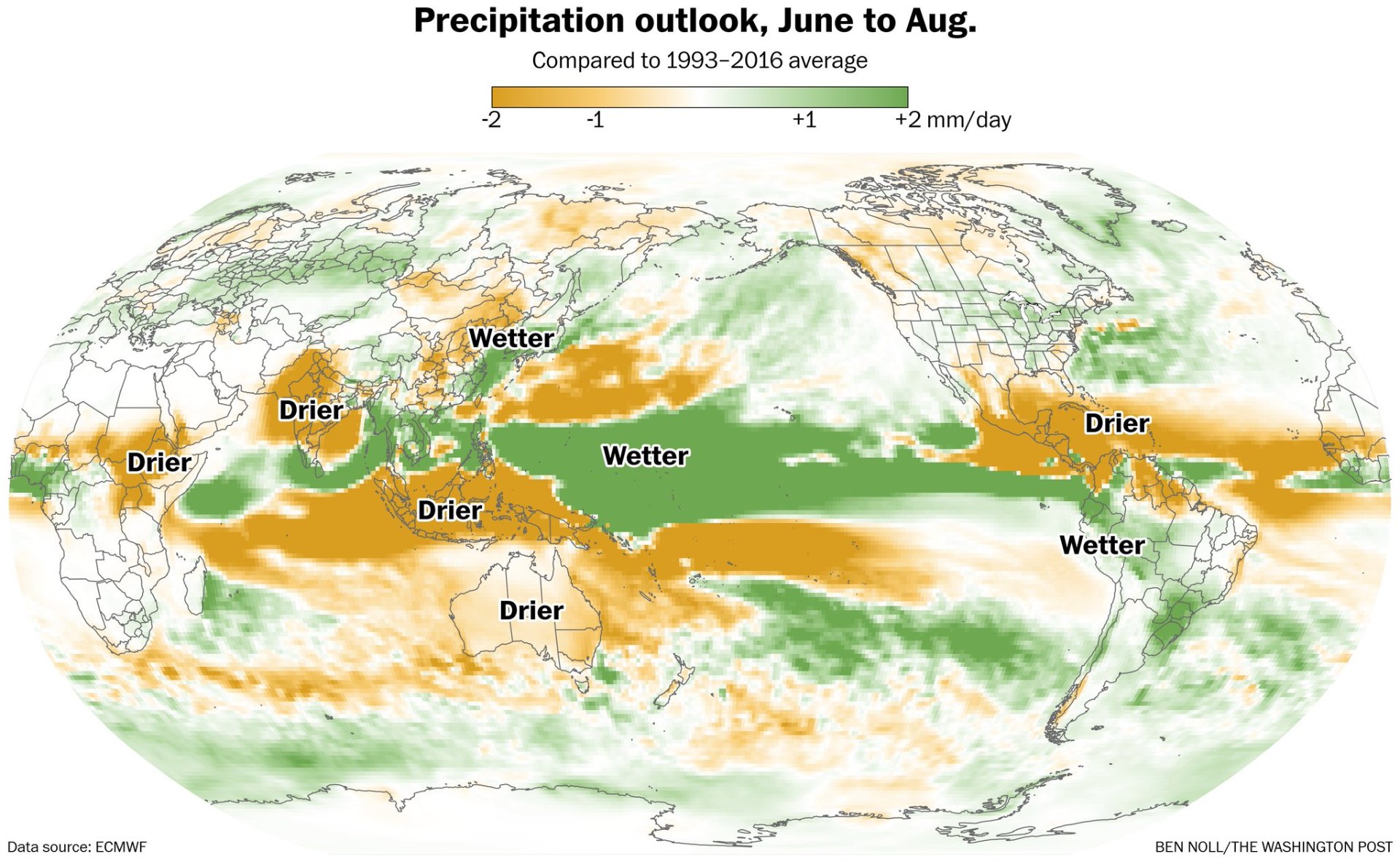
In this guide, we break down the latest seasonal precipitation outlook region by region, so you can plan your summer and autumn holidays with confidence. The map below shows expected precipitation anomalies: brown areas indicate drier-than-normal conditions, while green areas suggest above-average rainfall.
Track live weather conditions
SunFinder updates daily with real weather data for 395 destinations worldwide.
Check live sun scoresRegional Breakdown: What El Niño Means for Your Holiday
🏝️Caribbean & Central America — Drier, Sunnier Conditions
Below-average rainfall expected
El Niño typically suppresses hurricane formation and reduces rainfall across the Caribbean basin. The 2026 outlook suggests drier conditions from June through October — historically the wet season.
This is excellent news for summer travellers. Islands like Aruba, Curaçao, Barbados, and the Cayman Islands — already among the driest in the region — could see even less rain than usual. If you've been hesitant about Caribbean travel during summer, an El Niño year may offer your best window. Just keep an eye on SunFinder's live scores as the season progresses.
🇮🇳India & South Asia — Weaker Monsoon, Drier Skies
Monsoon likely to be below normal
El Niño is historically associated with a weaker Indian monsoon. The ECMWF data suggests below-average precipitation across the subcontinent, particularly in central and southern India.
For travellers, a weaker monsoon could open up destinations like Goa, Kerala, and Sri Lanka earlier in the season than usual. Rajasthan and the Himalayan foothills may also see clearer skies. That said, monsoon variability means you should still check live conditions close to your travel dates — SunFinder tracks this in real time.
🌍East Africa (Ethiopia, Kenya, Tanzania) — Drier Conditions
Below-average rainfall expected during the long rains
The ECMWF outlook shows drier-than-average conditions across the Horn of Africa and East African highlands, including Ethiopia, Kenya, and northern Tanzania.
Drier conditions are generally positive for safari travel and trekking. The Serengeti migration, Ethiopian highlands, and Kenyan game reserves could benefit from clearer skies and better wildlife viewing. If you're planning a summer safari, El Niño conditions may work in your favour — fewer muddy trails and better visibility.
🌧️Southeast Asia (Thailand, Vietnam, Indonesia) — Wetter Than Usual
Above-average rainfall expected
El Niño tends to shift rainfall patterns eastward, bringing wetter conditions to parts of mainland Southeast Asia. Thailand, Vietnam, and parts of Indonesia may experience heavier-than-normal wet season rainfall.
If Thailand or Vietnam is on your radar for summer 2026, consider timing your trip carefully. The shoulder months (May, early June, or late October) may offer better conditions than peak monsoon. Alternatively, destinations in the southern hemisphere — like Bali's dry season — may be less affected. Use SunFinder to compare live conditions across the region before booking.
🇪🇺Europe — Business as Usual
Minimal El Niño impact expected
El Niño has very little direct influence on European summer weather. The continent's climate is primarily driven by the North Atlantic Oscillation and jet stream patterns, which operate largely independently of Pacific Ocean temperatures.
Mediterranean destinations — Spain, Greece, Italy, Portugal, Croatia — should deliver their usual reliable summer sunshine regardless of El Niño. Northern Europe remains its usual unpredictable self. For European holidays, focus on SunFinder's live 16-day forecast rather than seasonal outlooks.
What This Means for Travellers
- ✦Caribbean summer holidays could be sunnier than usual — consider destinations you'd normally avoid in hurricane season.
- ✦Southeast Asia travellers should monitor conditions closely and consider shoulder-season dates or alternative regions.
- ✦Africa safari season could be excellent, with drier trails and better game viewing in East Africa.
- ✦European holidays are largely unaffected — book with confidence and use SunFinder's live forecast for day-to-day planning.
Frequently Asked Questions
What is El Niño and how does it affect weather?›
El Niño is a climate pattern caused by warming of the central and eastern Pacific Ocean. It disrupts normal atmospheric circulation, shifting rainfall patterns worldwide. Some regions get drier (Caribbean, India, East Africa), while others get wetter (Southeast Asia, parts of South America).
How reliable are seasonal weather forecasts?›
Seasonal forecasts indicate broad trends, not day-to-day conditions. They're most reliable for tropical regions where El Niño has the strongest signal. For specific travel dates, always check SunFinder's live 16-day forecast closer to departure.
Should I avoid Southeast Asia in summer 2026?›
Not necessarily. El Niño increases the probability of heavier rainfall, but it doesn't mean it rains every day. Many travellers enjoy Southeast Asia during monsoon season — rain often comes in short, intense bursts. Use SunFinder to monitor conditions and choose the driest windows.
Will El Niño affect hurricane season?›
Yes — El Niño typically reduces Atlantic hurricane activity by increasing wind shear, which disrupts storm formation. This is good news for Caribbean travellers during the June-November hurricane season, though individual storms can still form.
How can SunFinder help me plan around El Niño?›
SunFinder tracks live weather data for 395 destinations daily. Rather than relying on seasonal averages, you can check real-time sun scores, temperature, and rain probability for your exact dates. This is especially valuable during El Niño years when conditions deviate from historical norms.