Published 1 July 2026
Too Hot in Europe Right Now? 4 Places Where You Can Actually Breathe
Written sweating at a desk in Belgium, completely done with this heatwave.
I am going to be completely honest with you. I have been sitting at my desk in Belgium for the past week and it has been 38 degrees. Thirty-eight. In Belgium. My laptop overheated twice. The cat has not moved from the bathroom tiles in four days. And every time I open the news there is another number, another record, another city somewhere in France or Spain or Germany that has never been this hot in June, ever, in recorded history.
From late May onwards Europe was struck by severe heatwaves, with temperature records being broken in Belgium, France, Germany, Hungary, Romania, Ireland, Italy, the Netherlands, Poland, the Czech Republic, Denmark, Spain and the UK. On 22 June, temperatures peaked at 45.1°C in southern Spain. The heatwave is being sustained by what meteorologists call an omega block — hot dry air from North Africa trapped over a region while low-pressure systems on either side prevent it from moving away. Across France, Germany, Italy, Spain and southern England, temperatures are reaching 5–12°C above seasonal averages.
This is not a normal hot summer. This is a heat dome. And the worst part is not even the temperature itself — it is the nights. The heatwave has already turned lethal. Extreme heat is a silent killer, with so-called tropical nights where temperatures do not drop below 24°C, denying the human body its vital window to cool down.
So I opened SunFinder. I looked at which European destinations were sitting at a civilised, coat-optional, actually-pleasant-to-be-outside temperature right now. Here is what I found.
On the weather data below: temperatures and sunshine figures are based on long-term historical averages. Conditions vary, and during a heatwave some cool-weather destinations may also be running slightly warmer than usual. Always check live forecasts at SunFinder before booking — it tracks real-time conditions across all of these destinations simultaneously.
🇮🇸1. Iceland — 13°C and the Most Dramatic Landscape in Europe
I want to start with the obvious thing and get it out of the way: yes, 13°C sounds unhinged when you have spent a week wilting in Belgium. But the point right now is not to find the warmest destination. It is to find somewhere where you can go outside at 2pm and not feel like you are being slowly cooked.
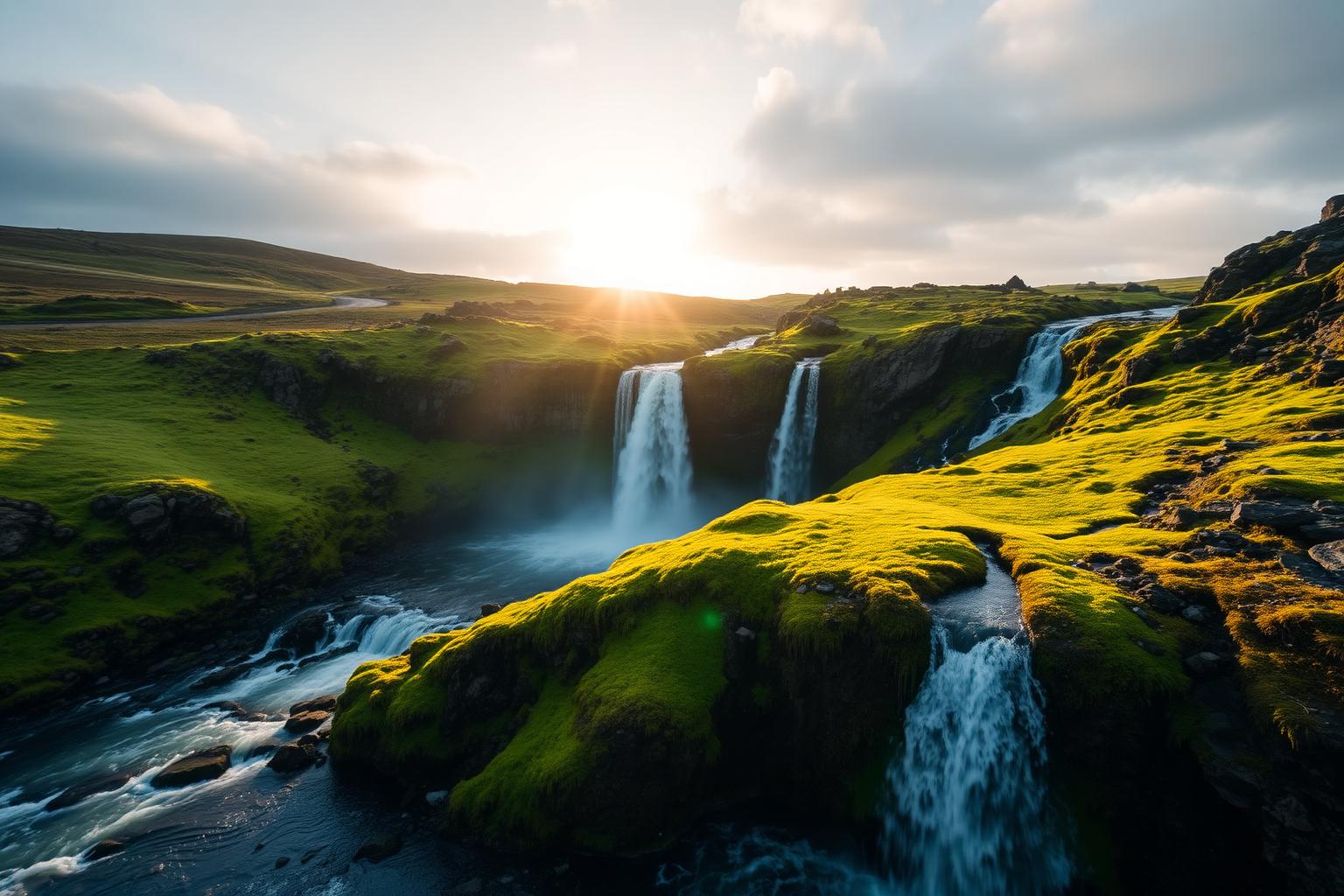
Iceland in summer is one of the most extraordinary places on earth and the temperature is a feature, not a bug. The average daytime temperature in July is 13°C but it can reach up to 20°C. While not exactly tropical, the mild weather and abundant daylight allow you to make the most of the Icelandic summer. And the daylight is the thing nobody quite prepares you for. July offers nearly 24 hours of usable daylight. Bright evenings and early mornings make it easier to visit popular sites like Skógafoss and Jökulsárlón outside peak hours. You can hike at 10pm in full light. You can drive across a lava field at midnight.
What Iceland gives you that nowhere else in Europe can match right now is the feeling of space. Waterfalls running full from snowmelt, the kind of landscape that makes you understand why Icelanders believe in elves, hot springs you can sit in while the air is at 12°C and the steam rises around you in the late evening light.
The Golden Circle is the obvious starting point and for a reason. Geysir erupts every few minutes. Gullfoss is the most powerful waterfall in Europe by volume. Þingvellir, where you can stand in the actual crack between the North American and Eurasian tectonic plates, is one of those places where the word "extraordinary" genuinely applies. Then drive south to the black sand beaches at Reynisfjara, where the Atlantic crashes against basalt columns and the temperature is probably around 11°C and it is one of the most dramatically beautiful places you can stand in Europe.
The practical notes: hire a car. This is non-negotiable. Iceland without a car is Iceland through a bus window. Road conditions in July are good, the Ring Road is fully open, and the Highlands F-roads are accessible by four-wheel drive. Book accommodation in advance because July is peak season.
Affiliate links — we may earn a commission, at no cost to you.
🇳🇴2. Norway and the Lofoten Islands — Cool, Jaw-Dropping, Completely Addictive
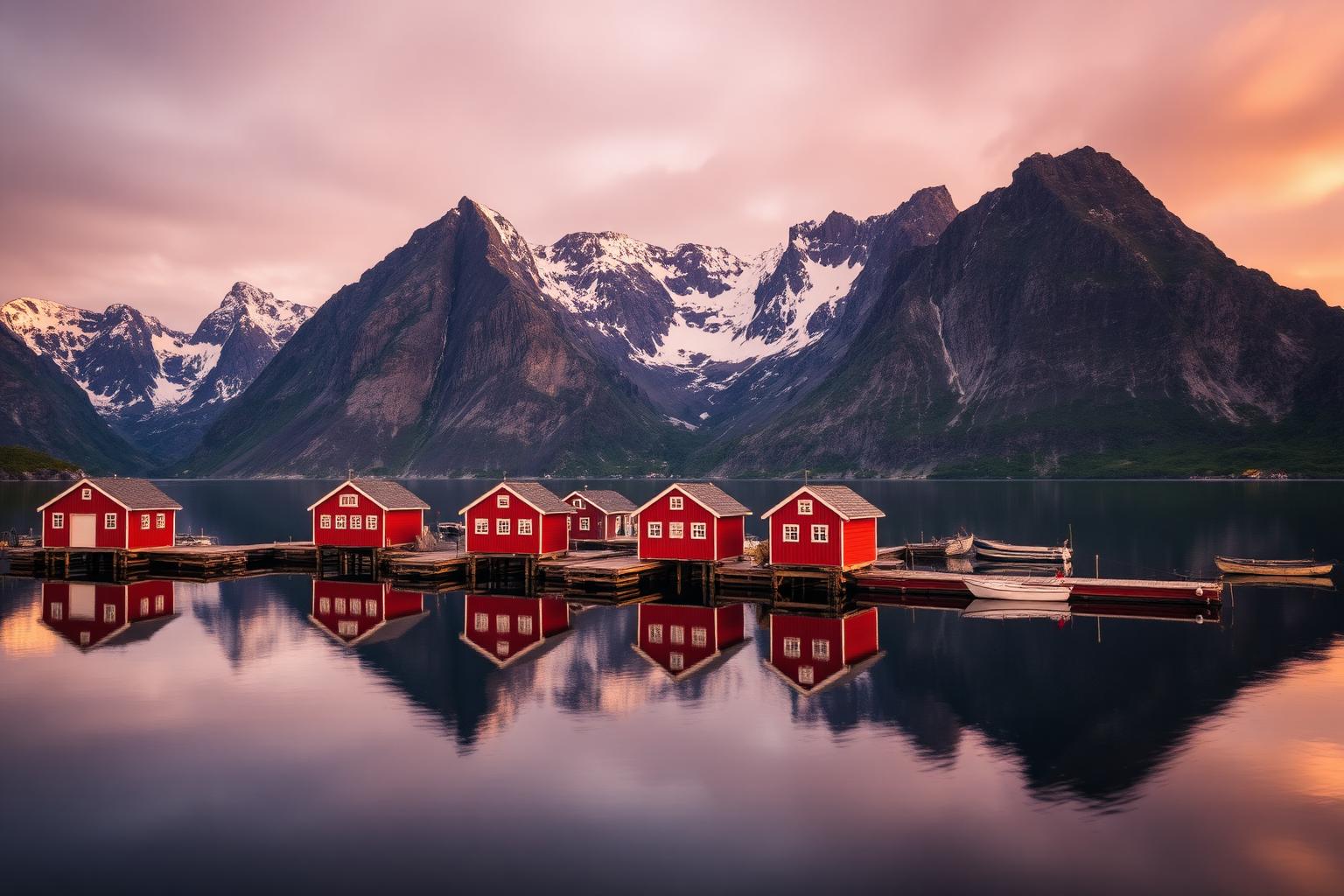
If Iceland is the dramatic alien landscape, Norway is the one that makes you feel like you have walked into a painting and cannot quite believe it is real. That sounds like a tourism brochure but there are no better words for what it is like to drive around a corner in the Lofoten Islands and see red wooden rorbuer reflected in still water with mountains behind them.
In the southern regions such as Oslo and the Bergen–fjord area, temperatures typically linger in the mid-20s during the day, dropping to the mid-teens at night, while daylight lasts 16–18 hours. Above the Arctic Circle, the sun never sets during the first half of July. Temperatures in Lofoten in July top out at 15°C and drop to 11°C overnight. This is not warm by beach-holiday standards. But right now, after the week Europe has just had, 15°C sounds like relief.
Bergen is the sensible starting point. It is easy to fly into, one of the most beautiful small cities in Europe, and it sits at the entrance to the fjord network that makes Norway famous. Average July temperature is 15°C with daytime reaching 18°C and around seven hours of sunshine per day. Wander the Bryggen wharf, take the Fløibanen funicular to the top of Mount Fløyen, eat fish soup at one of the harbour restaurants, then get in a car and drive north.
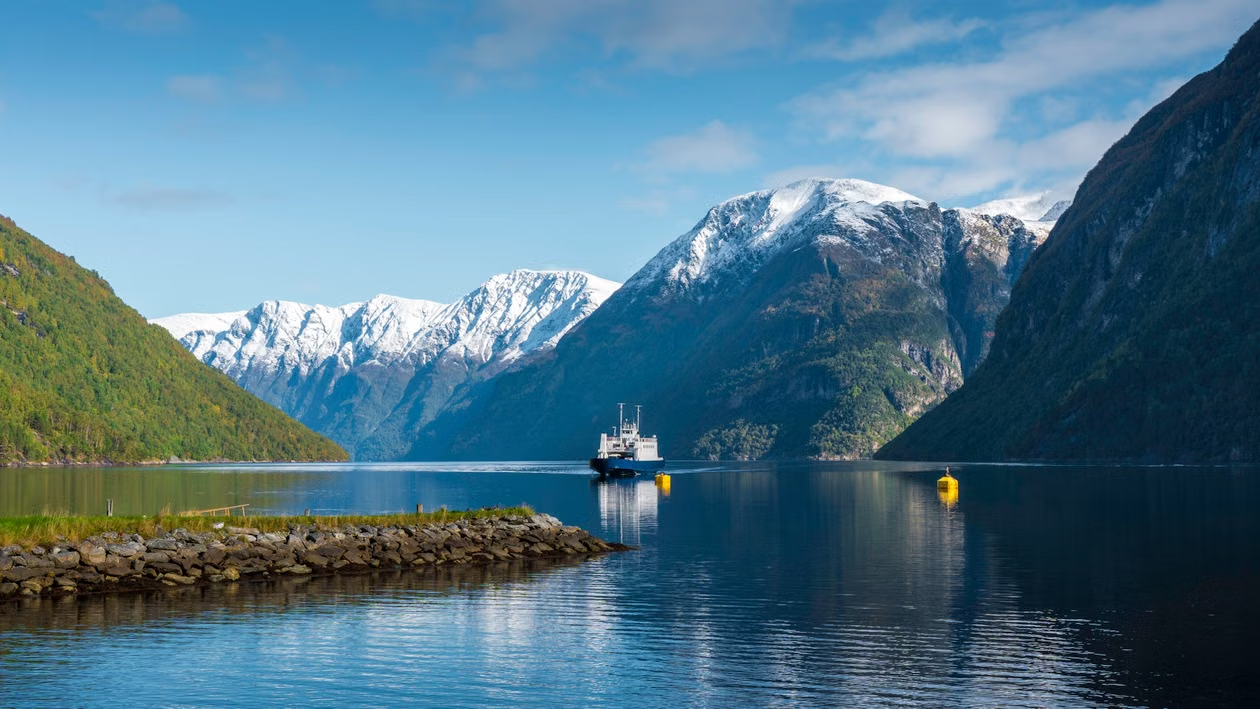
The fjords are the thing. Nothing prepares you for the scale of Geirangerfjord or Nærøyfjord — the waterfalls coming off the cliff walls, the water so still and deep it reflects the mountains perfectly, the ferry crossings where you feel like time has made a different arrangement. If you can manage a week and a flight north, the Lofoten Islands are where Norway becomes genuinely life-altering. The Gulf Stream keeps them warmer than you expect. The hiking is extraordinary. The quality of the light in summer creates photographs that make people think you have used a filter when you have not.
Affiliate links — we may earn a commission, at no cost to you.
🇩🇰3. Copenhagen and Bornholm — Cool Cities, Island Quiet, Great Summers
Denmark makes this list for a very specific reason that has nothing to do with mountains or waterfalls. Sometimes what you need after being slow-cooked by a heat dome is not a dramatic landscape. Sometimes you need a city with great coffee, excellent food, people cycling everywhere in linen, and air temperature that means you can actually do things in the afternoon rather than retreating to an air-conditioned room.
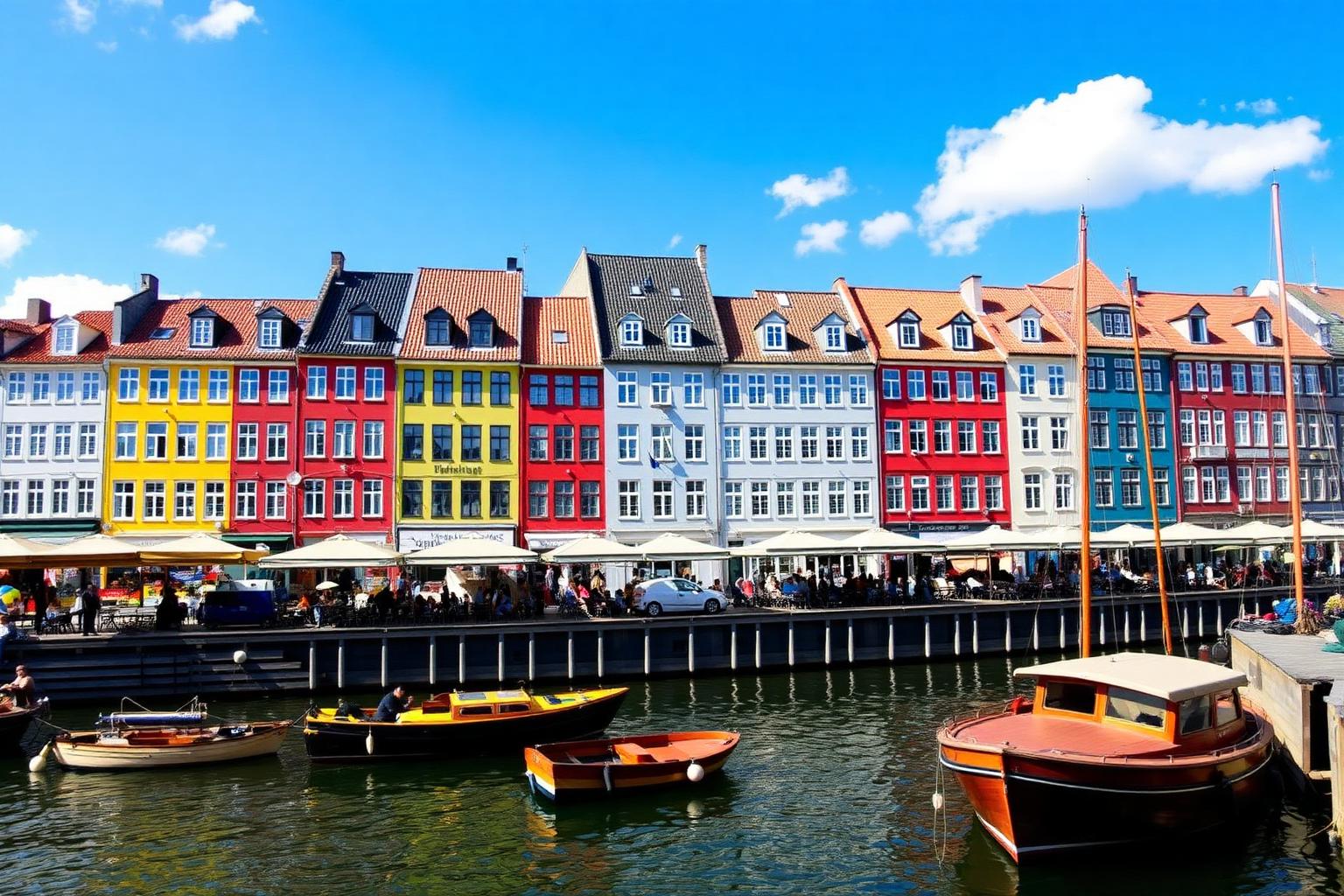
Copenhagen in summer sits at around 20–22°C, which is the exact temperature at which being outside feels effortless. The canal at Nyhavn with its coloured buildings is one of the most genuinely cheerful places in Europe. The food is remarkable, the cycling infrastructure means you can get around like a local, and the Danes have a specific talent for creating outdoor spaces, harbour swimming spots and street food markets that make a summer city break feel genuinely restful.
Tivoli Gardens in summer is one of the most atmospheric places in Europe after dark. The old amusement park in the centre of the city, surrounded by twinkling lights, with a concert hall and flower gardens and the kind of Scandinavian magic that is completely impossible to describe to someone who has not sat there with a beer at 10pm in the still-light evening.
The island of Bornholm, in the Baltic about two hours from Copenhagen by ferry, is famous for its round churches, its smoking houses where herrings are cold-smoked over alder wood, its cycling trails and its light. Artists have been going to Bornholm for the light for 150 years and they were right to. The landscape is completely different from the rest of Denmark: a rocky coastline in the north giving way to sandy beaches in the south. Temperatures on Bornholm in summer are slightly warmer than Copenhagen thanks to its Baltic location, typically sitting around 20–24°C with more sunshine hours than the mainland. Take bikes.
Affiliate links — we may earn a commission, at no cost to you.
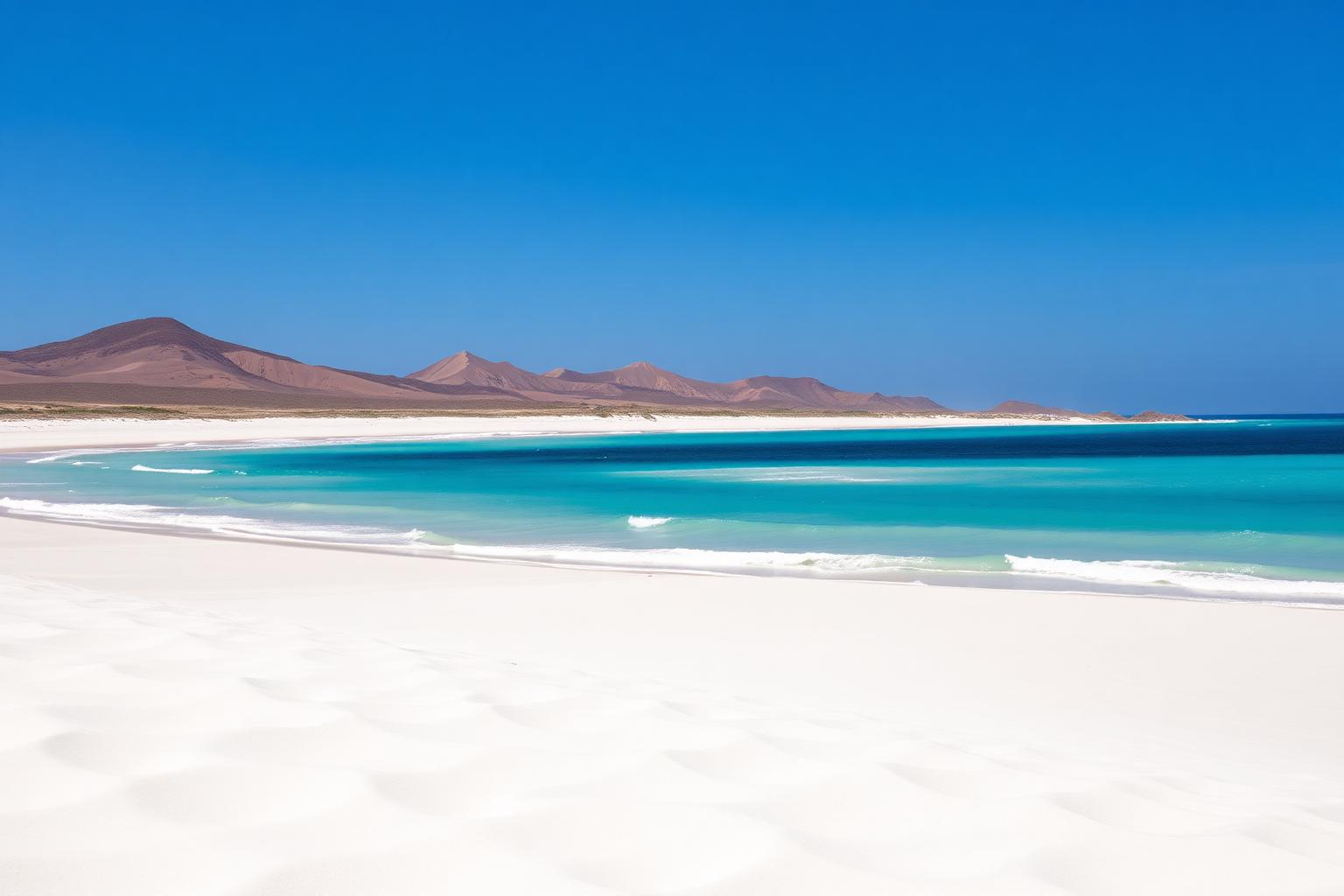
🇪🇸4. Fuerteventura — Hot Enough to Be a Beach Holiday, Cool Enough to Enjoy It
You want to escape the heat and here is a Canary Island. Bear with me.
Fuerteventura is a specific case. The Canaries stay cooler than mainland Europe in summer because of the Atlantic and the Canary Current. But Fuerteventura specifically is also the windiest of the Canary Islands, which changes everything. The constant north-easterly trade winds that blow across the island year-round mean that even when the thermometer says 28°C it feels nothing like 28°C in Paris or Madrid or Brussels right now. The wind is constant, dry and cooling. It is the reason the island has become the world capital of kitesurfing, and it is the reason that sitting on a beach in Fuerteventura in the middle of summer feels physically comfortable in a way that sitting on a beach in Mallorca or Ibiza does not.
The dune system at Corralejo in the north is one of the most extraordinary natural landscapes in Spain. A UNESCO-protected reserve of white sand dunes running for several kilometres to the edge of the Atlantic, it looks more like the Sahara than a Spanish island. The beach backed by these dunes is also 11 kilometres long and almost entirely free.
Sotavento beach in the south is famous for a different reason: it is so flat and wide at low tide that it hosts the world kiteboarding championships every year. You do not need to kitesurf to enjoy it. Watching the kites from a beach chair while the wind keeps you entirely comfortable at midday in summer is one of the most pleasant afternoons you can have right now in Europe.
The other thing Fuerteventura has going for it is value. Flights from most northern European cities are frequent and affordable. All-inclusive hotels are good value. And the local towns, particularly Puerto del Rosario and Corralejo, have a local restaurant scene that is completely separate from the resort strip and costs almost nothing.
Affiliate links — we may earn a commission, at no cost to you.
How to Check Where Is Actually Cool Right Now
The honest thing about a live heatwave situation is that historical averages become less useful than usual. What you want to know is not what the average temperature is in Iceland in July — you want to know what it is actually going to be there next week when you arrive.
SunFinder tracks live and forecast weather across more than 400 destinations simultaneously, which means you can compare Iceland, Norway, Copenhagen and Fuerteventura on your specific travel dates right now and see which one is looking coolest and most comfortable. During a heatwave event like this one, the live data is significantly more useful than historical averages, and the comparison tool means you do not have to search each destination individually.
The rest of Europe is melting. But not everywhere is. And frankly, after the week we have just had, a 13°C evening in Reykjavík with the sun still technically above the horizon sounds like the most luxurious thing in the world.
Frequently Asked Questions
Where is cool in Europe during a heatwave?›
During a European heatwave, the coolest destinations are Iceland at 11–16°C, the Lofoten Islands in Norway at 11–15°C, and Copenhagen in Denmark at around 18–22°C. All three are significantly below the heat dome affecting mainland Europe. Fuerteventura sits at 26–28°C but with constant Atlantic trade winds that make it feel considerably cooler than mainland hotspots.
Is it worth going to Iceland in summer to escape the heat?›
Absolutely. Iceland in July sits at around 13–16°C, refreshingly cool by European heatwave standards. The payoff is extraordinary: nearly 24 hours of daylight, the Golden Circle, waterfalls at full flow, black sand beaches, and dramatic landscape that cannot be found anywhere else in Europe. Hire a car, book in advance as July is peak season, and bring layers.
How hot does it get in the Canary Islands in summer?›
The Canary Islands sit at 24–28°C in summer, significantly cooler than mainland Spain, France or Italy during a heat dome event. Fuerteventura specifically benefits from strong constant north-easterly trade winds that make the felt temperature considerably lower than the thermometer suggests. It is the most wind-cooled beach destination in Europe.
Can I check live temperatures for cool destinations in Europe?›
Yes. SunFinder tracks live and forecast weather across 395 destinations worldwide and lets you compare them simultaneously on your specific travel dates. During a heatwave it is particularly useful for seeing which cool destinations are tracking best in real time rather than relying on historical averages alone.
Find somewhere cool right now
Compare live temperature and sunshine across 395 destinations — and escape the heat dome.
Find my cool destinationWeather data based on long-term historical averages and current meteorological sources. For live forecast data across all destinations mentioned, visit SunFinder. Heatwave figures sourced from World Meteorological Organization, World Weather Attribution, Météo-France, AEMET and Guardian live coverage. Affiliate links are partnerships that help fund this site at no additional cost to you. Recommendations are editorially independent.